The voice of a General-category student

Reservation Hatao. Merit Bachao.

I pay the highest fee. I clear the highest cut-off. I get the fewest attempts. Enough. This site is my case — in simple words, with official numbers, real quotes and the law. Read it, check it, share it.

मेरिट को न्याय दो — मदद ज़रूरत के आधार पर, जन्म के आधार पर नहीं।

🆕 Proof: −40/800 "qualified" for PG medicine, 8/100 selected as UP accountant · 🌏 World Trend · 🏛️ Neta Ji Ki Marksheet

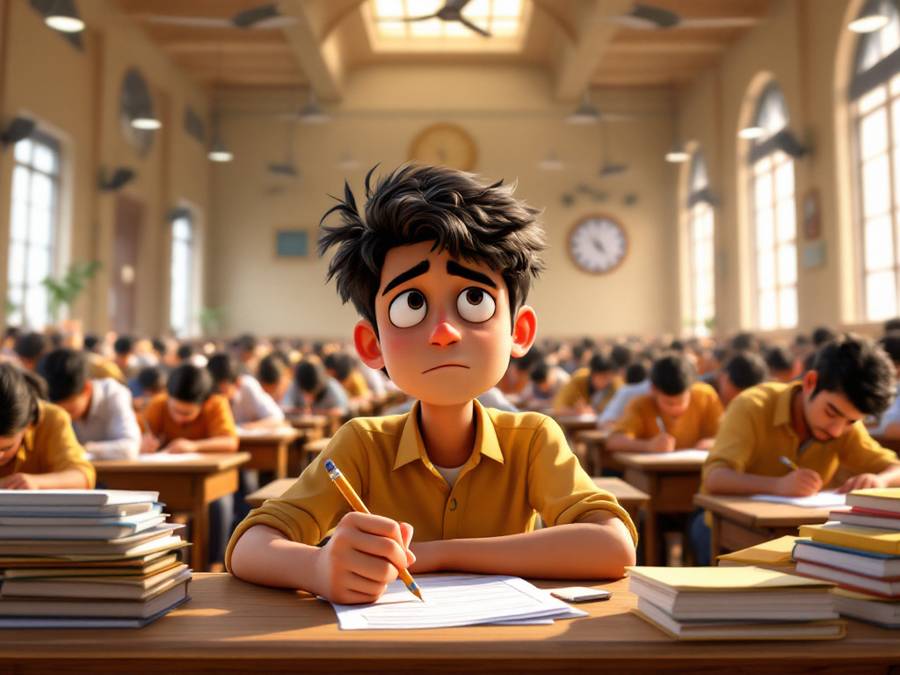
Cartoon student holding books in front of a tilted scale
59.5%central seats reserved
40.5%open to all (no General quota)
6UPSC attempts for General/EWS
63source-checked quotes

Proof: The System in Numbersसबूत: आंकड़ों में सिस्टम

Talk is cheap. Here is what the system actually did — from government notices, court orders and newspaper reports. Every line has its source under it. Where the full truth is more complicated, we say so. Facts do not need exaggeration.

Medicine · NEET-PG
−40 / 800

Minus 40 marks out of 800 — and still "qualified" to become a specialist doctor

  • On 20 September 2023 the Health Ministry cut the NEET-PG 2023 qualifying percentile to ZERO — across all categories (official MCC notice).
  • The Times of India worked out what zero percentile meant: 14 candidates who scored zero, 13 with negative marks, and the one with the lowest score of −40 out of 800 would also qualify.
  • NEET-PG 2024: in January 2025 the cut-off was lowered to the 15th percentile (General/EWS) and 10th (SC/ST/OBC/PwD); in February 2025 it was cut again to the 5th percentile for all.
  • NEET-PG 2025 — the double standard: on 13 January 2026, for the third counselling round, the cut-off became the 7th percentile (score 103 out of 800) for General/EWS — but ZERO percentile (score −40) for SC/ST/OBC. Same exam, same seats: a General candidate needed 103 marks, a reserved candidate could have minus 40. Reason given: over 18,000 PG seats were still vacant. Hindustan Times, 13 Jan 2026 · The Federal
  • The board itself told the Supreme Court: "pursuant to the lowering of cut off 95,913 additional candidates have now become eligible to participate in the counselling for NEET PG 2025" — qualified candidates jumped from 1,28,116 to 2,24,029. ETV Bharat (PTI), 17 Feb 2026
  • Seats actually given (NEET-PG 2025, round 3, as reported by The Federal and Medical Dialogues — scores like −12, −8, −5, 4, 10 and 11 out of 800 got MD/MS seats): an Orthopaedics seat at a government college in Rohtak to a candidate with 4 marks out of 800; a Physiology seat in Tamil Nadu to minus 12; candidates with minus 8 got Biochemistry seats, "particularly under reserved and PwD categories".
  • How many? In NEET-PG 2023, 14 candidates with zero and 13 with negative marks became eligible (TOI). In NEET-PG 2025, 126 candidates scored zero or less (TOI); over 18,000 seats were vacant after two rounds.
  • In July 2022 the government itself told a court that a "minimum qualifying percentile for admission is required to be maintained to ensure minimum standard of education". On 4 February 2026 the Supreme Court issued notice on a plea against the 2025 cut; on 6 October 2026 it asked the board for a report within two weeks on the "103 and minus 40" cut-offs, but refused an interim stay. Medical Dialogues, 11 Feb 2026
  • And it continues: in NEET-PG 2026, 258 candidates scored zero or negative (lowest −59) — India Today, 1 Oct 2026.

To be fair: in 2023 the zero cut-off applied to every category, General included (in 2025-26 it was zero only for SC/ST/OBC). −40 is the lowest score that became eligible; the lowest scores reported as actually getting a seat are −12 and −8. No report gives a category-wise count of who got seats with zero or minus marks.

Our opinion

A paper with negative marking means a minus score is worse than leaving it blank. If a minus score is "qualified" to train as a specialist, the word "qualified" has lost its meaning. Fill empty seats by improving colleges and stipends — not by throwing away the standard.

Sources: Medical Counselling Committee (DGHS) — MCC Notice 20-09-2023: NEET-PG 2023 qualifying percentile reduced to ZERO (2023-09-20) · Times of India — NEET PG Counselling 2023: Health Ministry reduces cut-off percentile to zero across all categories (2023-09-20) · Times of India — In 2023 too, -40 was good enough for NEET PG (2026-01) · Times of India — NEET PG 2024 cut off percentile reduced again (2025-02) · Hindustan Times — Cutoff percentile for NEET-PG 3rd counselling round 0 for reserved applicants (2026-01-13) · The Hindu (PTI) — SC notice to Centre on plea challenging NBEMS's decision to reduce NEET-PG cut-off percentile (2026-02-04) · The Federal — NEET PG cutoff slashed to zero: Negative scorers get PG seats (2026-02)
Uttar Pradesh · Government job
8 / 100

8 marks out of 100 — selected as Assistant Accountant (सहायक लेखाकार) in UP

  • UPSSSC declared the final result of the Assistant Accountant & Auditor recruitment (Advt. No. 03-Exam/2024) on 12 August 2026: 1,643 selected for 1,828 posts.
  • Assistant Accountant, Special Selection — cut-off (marks of the last selected candidate, out of 100): SC 8.00, ST 20.25, OBC 47.25.
  • Dainik Bhaskar's headline: "आठ नंबर लाकर भी बन गए सहायक लेखाकार" — "In the 100-mark written exam, SC candidates scoring 8 marks and ST candidates scoring 20.25 were selected."
  • Same recruitment, General Selection cut-off: Unreserved 54.75, EWS 52.00, OBC 45.25.
  • How many? The Special Selection filled 866 of 950 posts (SC 341, ST 12, OBC 513). The 8.00 is the score of the last SC candidate selected; the reports do not say how many others scored near it.
CategoryCut-off out of 100
Unreserved (General Selection)54.75
EWS (General Selection)52.00
OBC (Special Selection)47.25
ST (Special Selection)20.25
SC (Special Selection)8.00

To be fair: the "Special Selection" had no Unreserved or EWS posts at all — it was only for SC/ST/OBC — so the 8-mark candidate competed only inside the SC pool. Even so, only 341 SC candidates were found for 399 SC posts. The commission says the result is subject to pending High Court cases.

Our opinion

This is a job that handles public money. When there is no minimum qualifying mark, a seat reserved by birth can go to 8 out of 100 while a General candidate needs 54.75. Fix it: a minimum pass mark for every category, and backlog posts filled by training people up — not by dropping the bar to the floor.

Sources: Dainik Bhaskar — आठ नंबर लाकर भी बन गए सहायक लेखाकार: 1828 पदों पर 1643 ही योग्य अभ्यर्थी मिले (2026-08) · Jagran Josh — UPSSSC Assistant Accountant Cut Off 2026 Released at upsssc.gov.in: Category-Wise Marks (2026-08-13) · ABP Live — UPSSSC Result 2026: सहायक लेखाकार-लेखा परीक्षक का रिजल्ट घोषित, 1828 पदों पर 1643 कैंडिडेट्स सेलेक्ट (2026-08) · Navbharat Times — UPSSSC Final Result 2026: असिस्टेंट अकाउंटेंट और ऑडिटर का फाइनल रिजल्ट जारी, देखें कटऑफ (2026-08-13)
"जिस देश में −40 नंबर पर डॉक्टर और 100 में से 8 नंबर पर सरकारी अकाउंटेंट बनाए जा रहे हैं, उस देश का भविष्य अंधकार में नहीं — ब्लैक होल में जा रहा है।"
"A country that makes doctors at −40 marks and government accountants at 8 out of 100 isn't heading into darkness — it's heading into a black hole."
— A General-category student
Rajasthan · Class-IV jobs
0.0033

Cut-offs of 0.0033 marks — until the High Court stepped in

  • In Rajasthan's Class-IV Employee Recruitment 2024, cut-off marks for some categories were as low as 0.0033. Nearly 24.75 lakh people applied for 53,749 posts.
  • Rajasthan High Court, March 2026: "A person who secures near-zero or negative marks cannot reasonably be considered suitable."
  • On 22 May 2026 the High Court quashed every merit list with a zero or near-zero cut-off and ordered minimum qualifying marks: "every govt recruitment must maintain a minimum standard of eligibility and merit".

To be fair: the cancelled lists included special categories like ex-servicemen, widows, the Saharia community and people with disabilities — not only SC/ST/OBC. The board had argued the rules set no minimum marks. That is exactly the problem.

Sources: Times of India — HC cancels near-zero cutoff merit lists in Class-IV recruitments (2026-05-22) · The Pioneer — Rajasthan HC warns Govt on zero cut-off for reserved categories (2026-03-06)

More UP job cut-offs, same exam hall

Bank jobs: same form, different price

Our opinion

A poor General-category boy from a village pays ₹750–₹850 for the same form that is free or ₹175 for a rich officer's child from a reserved category. Fee waivers should go by family income, not by surname.

The 50% ceiling

The 50% Cap Is Breaking · 50% लिमिट टूट रही है

Nine Supreme Court judges said it in Indra Sawhney (1992): "While 50% shall be the rule, it is necessary not to put out of consideration certain extraordinary situations…" judgment text

Since then, states keep trying to cross the line — usually close to an election:

  • Tamil Nadu — 69%. Protected by putting the 1993 law in the Ninth Schedule through the 76th Amendment (1994). Frontline: it "runs counter to the Supreme Court ruling in the Mandal case that reservation should not exceed 50 per cent". Frontline
  • Bihar — 65%. Raised from 50% to 65% in November 2023 after the caste survey. The Patna High Court struck it down on 20 June 2024; the Supreme Court refused to stay that on 29 July 2024 (appeal pending). The Hindu · SC Observer
  • Maharashtra — Maratha quota. Struck down on 5 May 2021 by five judges "for exceeding the 50% limit". In February 2024 the state passed a new 10% Maratha quota "over and above" existing reservation; the Bombay High Court is hearing challenges. SC Observer · PRS India
  • Jharkhand — 77%. A bill passed on 11 November 2022 to take state-job reservation to 77% and seek Ninth Schedule cover. The Governor returned it for review in April 2023 on the Attorney General's opinion. Hindustan Times
Our opinion

Every time a state goes past 50%, it is the open category — the only seats where merit alone decides — that shrinks. Courts keep saying "50% means 50%". Politicians keep trying anyway, because a new quota buys votes. That is vote-bank politics, not social justice.

Justice denied · a real case

Vishnu Tiwari: 20 years in jail for a crime the High Court says he did not commit

  • Lalitpur, Uttar Pradesh. Arrested on 16 September 2000, aged 23, on a rape complaint, and booked under the IPC and the SC/ST (Prevention of Atrocities) Act.
  • On 24 February 2003 a Lalitpur court convicted him: 10 years for rape and life imprisonment under the SC/ST Act.
  • His appeal, sent from jail in 2005, "remained as a defective matter for a period of 16 years".
  • On 28 January 2021 the Allahabad High Court acquitted him: "we are convinced that the accused has been wrongly convicted". It found the FIR was lodged three days late, the medical evidence did not support the charge, the witnesses contradicted each other, and there was a land dispute between the families. It called the trial court's SC/ST Act reasoning "against the record and … perverse".
  • The Court also said: "We are pained to mention that even after 14 years of incarceration, the State did not think of exercising its power for commutation of sentence."
  • He walked out of Agra jail on 3 March 2021, aged 43, with ₹600. His father and brothers had died while he was in jail. His words: "My body is broken and so is my family."

This is one man's case. It is not a statement about any community — the victims here are the truth and an innocent family.

Our opinion

When a law can be used in a land dispute and the system then forgets a man for 16 years, the law and the system have failed. We demand: time-limited appeals, compensation for wrongful jail, and real punishment for proven false cases — whoever files them.

Sources: Times of India — Innocent man freed after 20 years in jail (2021-03-03) · NDTV (archived copy) — "My Body Is Broken...": UP Man Acquitted Of Rape After 20 Years In Prison (2021-03-03) · LawBeat — Vishnu Tiwari's Two Decades Of Incarceration: An Analysis Of His Acquittal (2021-03-19)

What the Supreme Court itself said in 2018

Dr. Subhash Kashinath Mahajan v. State of Maharashtra, 20 March 2018

"The legislature never intended to use the Atrocities Act as an instrument to blackmail or to wreak personal vengeance."
"Any harassment of an innocent citizen, irrespective of caste or religion, is against the guarantee of the Constitution."

To be fair: Parliament amended the Act in 2018 and on 1 October 2019 the Supreme Court recalled the arrest directions of this judgment. The words above remain the 2018 bench's own words. NCRB data (PIB, July 2026): conviction rate under the Act was 33.9% for crimes against SCs in 2024 — a low rate means most tried cases end without conviction; on its own it does not prove the cases were false.

Sources: Judgment text (Indian Kanoon) · Supreme Court Observer — 2019 recall · PIB, 27 Jul 2026 (NCRB)
"जिस देश में −40 नंबर पर डॉक्टर और 100 में से 8 नंबर पर सरकारी अकाउंटेंट बनाए जा रहे हैं, उस देश का भविष्य अंधकार में नहीं — ब्लैक होल में जा रहा है।"
"A country that makes doctors at −40 marks and government accountants at 8 out of 100 isn't heading into darkness — it's heading into a black hole."
— A General-category student

World Trend: The Global Raceदुनिया की दौड़

The whole world is racing for talent. Crores of young people sit exams every year, and countries fight to attract the best minds. Here are the real numbers — and why India cannot afford to waste its best students.

🇨🇳 China — gaokao

Candidates in China's national college entrance exam

YearCandidates
202312.91 million
202413.42 million
202513.35 million
2026about 12.9 million

2024 was a record: 13.42 million — 5.1 lakh more than 2023. In 2026, "some 12.9 million" sat, against 5.7 million when the exam came back 49 years ago.

Source: Xinhua 2023 · Xinhua 2024 · Xinhua 2025 · Xinhua 2026

🇰🇷 South Korea — Suneung

College Scholastic Ability Test, held 13 November 2025

5,54,174

applicants — up 31,504 (6%) from the year before and the highest since 2018.

Source: Yonhap, 13 Nov 2025

🌍 The world — the talent race

UNESCO Higher Education Global Trends Report, May 2026

Students in higher education worldwide: 269 million in 2024 — more than doubled in 20 years.

Students studying abroad: nearly 7.3 million — tripled in the same period. Countries compete hard to pull in the best of them.

Source: UNESCO, 12 May 2026

India: more students than ever, too few seats

🇮🇳 UPSC Civil Services — fewer seats

Total vacancies notified for CSE 2025

979

vacancies in CSE 2025 — while lakhs apply every year.

Source: Times of India, 24 Jan 2025
Our opinion

The world is not waiting for us. China, Korea and America push millions of students to their limit. When India lowers the bar to zero percentile, fills accounts jobs at 8 out of 100, and makes its brightest students fight over a shrinking open category, we are not "helping" anyone — we are wasting talent the country badly needs. Help the poor of every caste early, with good schools and coaching. Then let the best win.

Taxes & freebies

Who Pays, Who Gets · कौन भरता है, कौन पाता है

Our opinion

Our view: a large share of the tax that pays for freebies and schemes comes from hardworking middle-class families — many of them General-category — who get no quota, pay the highest exam fees and still pay their taxes honestly. This is our opinion: India publishes no caste-wise tax data, so nobody can give an exact number. What we can show are the facts below.

The facts:

  • Supreme Court, 12 February 2025 (Justices B.R. Gavai and A.G. Masih, oral remarks while hearing a case on night shelters): "Rather than making them contribute to the development of the nation, are we not creating a sort of parasite? Because of these benefits, people do not want to work." The Hindu, 13 Feb 2025
  • Supreme Court, 11 August 2022 (CJI N.V. Ramana, oral remarks on poll freebies): "People who are opposing have a right to say that they are paying tax. The amount has to spend for infrastructure etc and not on distributing money." He also said both economy and welfare must be balanced. ThePrint (ANI), 11 Aug 2022
  • RBI's study of state budgets 2024-25 (December 2024) listed farm-loan waivers, free electricity, free transport and cash allowances, and warned that "such spending could crowd out the resources" needed for infrastructure. ETCFO / PTI, 20 Dec 2024
  • India's taxpayers: a record 7.28 crore income-tax returns were filed for AY 2024-25 — in a country of about 140 crore people. PIB (CBDT data)
Our opinion

Votes are being bought with the taxpayer's money, and the bill goes to the next generation. Spend it on schools, hospitals and jobs — things that make people stand on their own feet.

Neta Ji Ki Marksheetनेताजी की मार्कशीट

To become an assistant accountant in UP, a General candidate needed 54.75 out of 100. To make laws for 140 crore Indians? No exam. No marks. No minimum anything. Welcome to the only "job" in India with no paper. Every fact below is from the Constitution, court records, ADR reports or the leaders' own election affidavits — the jokes are ours.

Report card · Bihar Chief Minister
7th → "Dr."

Samrat Choudhary: from "Upto 7th Class" to "Doctor of Letters" in 15 years

  • His 2010 election affidavit: education "Upto 7th Class". His 2025 affidavit: "Doctor of Litt. (honorary) PFC Kamraj University". 2010 affidavit · 2025 affidavit
  • Declared age: 28 in 2010, 56 in 2025 — he aged 28 years in 15 years.
  • Prashant Kishor alleges the Bihar School Examination Board told a court he "did not clear his class 10 exam and failed with 234 marks". The Times of India noted his claims make "no mention of his Class X completion", and viral videos show him struggling to explain what "PFC" means. Hindustan Times (PTI) · Times of India
  • As CM in June 2026, he promised a "University of Physics, or the University of Mathematics, or the University of Chemistry" for Bihar. Times of India, 4 Jun 2026
  • His 2025 affidavit declares 2 pending cases (rioting/hurt/assault on a public servant; an election offence), no convictions. On the old 1995 Tarapur murder case he says the court acquitted him; Prashant Kishor alleges he escaped trial by claiming to be a minor. The Hindu, 29 Sep 2025
  • Women's safety — Jamui, September 2026. Two Class 10 girls were harassed by a group of men on 19 September; the video went viral. On 22 September, at a "Real Heroes" event, the CM said: "These days people are losing their lives in the pursuit of making reels. Everyone must have seen what happened today. If he had not made the reel, would he have been caught?" (The Hindu's translation; Hindi media reported it as "रील नहीं बनाता तो पकड़ाता क्या?"). The main accused was shot in the leg in a police encounter the same day. The Hindu, 25 Sep 2026 · ThePrint, 24 Sep 2026
  • Leader of Opposition Tejashwi Yadav's reading: the CM was telling goons "Commit crimes quietly, but don't make reels or videos". The Hindu
  • That same week a photo of the minor victim with her parents was posted from the CM's official X handle and deleted after about 15 minutes; the RJD accused him of revealing her identity. The Hindu
  • On 6 October 2026, in Rohtas: "I tell my friends that they (critics) could only find 5 videos in all of Bihar." In the previous 20 days, more than half a dozen videos of minors being harassed had gone viral — from Jamui, Banka, Kishanganj, Gaya ji, Begusarai and Samastipur. (He also said anyone who touches Bihar's women would be "behind bars within 24 hours".) The RJD replied: "If the CM has any shame, even one video should be enough!" The Hindu, 8 Oct 2026

From 7th class to "Doctor" in 15 years, and 28 years older in the same 15. No coaching centre in Kota can promise results like that.

Our opinion

Our view: when a Chief Minister's first reaction to a minor girl being molested on camera is that the accused got caught only because he made a reel — and two weeks later he counts "only 5 videos" — it tells you how seriously this government takes women's safety. Meanwhile a girl from a General-category family needs top marks just to get a seat. Netas pass without an exam; students fail by one mark.

Reservation even in Parliament
131 / 543

Even MP and MLA seats are reserved — "temporarily", since 1950

  • Lok Sabha: 84 seats reserved for SCs and 47 for STs — 131 of 543. State assemblies: 614 SC + 554 ST seats out of 4,120.
  • It was meant for 10 years. Then it was extended in 1959, 1969, 1979, 1989, 1999, 2009 — and by the 104th Amendment in 2019, to 25 January 2030. Seven extensions of a 10-year rule.
  • In September 2023 a Constitution Bench framed questions on whether Parliament can keep amending Article 334 like this.
Our opinion

"Temporary" in Indian politics means "until the next election, forever". Our demand: let 2030 be the end — no eighth extension. Fight poverty with schools, scholarships and jobs, not with seats reserved by birth for 80 years.

Sources: PIB — State/UT Wise Seats in the Lok Sabha (2009) · Hindustan Times — Legislative and judicial contours of SC/ST quota in Lok Sabha and assemblies (2023-10) · constitutionofindia.net — Article 334 text (current)
Qualification check

A sarpanch needs Class 10. A Prime Minister needs nothing.

JobWhat you need
UP Assistant Accountant — Unreserved (2026)54.75 / 100 in the exam
Sarpanch in HaryanaClass 10 pass (upheld by the Supreme Court, Rajbala, 2015; middle pass for SC candidates and women)
MP, MLA, Chief Minister, Prime MinisterNothing. Be a citizen, be 25 (or 30), take the oath.

Articles 84 and 173 of the Constitution list citizenship, an oath and a minimum age — no educational qualification. A CM or PM must be (or become) a member of the legislature, so the same rule applies.

Sources: constitutionofindia.net — Article 84 (current) · constitutionofindia.net — Article 173 (current) · Indian Kanoon (SC judgment text) — Rajbala & Ors vs State of Haryana & Ors, 10 December 2015 (2015-12-10)
Report card · ADR
46%

Of the 2024 Lok Sabha MPs declared criminal cases

  • 251 of 543 MPs (46%) declared criminal cases; 170 (31%) face serious charges, including rape, murder, attempt to murder and kidnapping. It was 23% in 2004.
  • 105 MPs (19%) declared education between Class 5 and Class 12.
  • Across India, 302 of 643 ministers (47%) declared criminal cases; 174 (27%) serious ones (ADR, 2025).
Our opinion

If a student has a pending case, his government job offer is put on hold. If a neta has one, he gets a ministry.

Sources: ADR (New Indian Express) — Record 46% of newly elected Lok Sabha MPs facing criminal cases (2024-06-06) · ADR — 19 per cent winning candidates' education ranges from class 5 to 12, says ADR (2024-06) · ADR (PTI/Zee Business) — New council of ministers: 11 are 12th pass, 57 are graduate or above (2024-06-11) · ADR — Analysis of Current Ministers from 27 State Assemblies, 3 UTs and the Union Council of Ministers 2025 (2025)

Case files — from their own affidavits and court records

🎓 PM Modi's degree: the marksheet even courts keep sealed

  • In 2016 Gujarat University said he completed an MA in Political Science in 1983 with 62.3%.
  • Since then, a 10-year court fight over disclosure. In 2023 the Gujarat High Court quashed the order to share the records and fined Arvind Kejriwal ₹25,000; a Division Bench upheld that on 29 September 2026.
  • Delhi High Court, 25 August 2025: the "mark sheets, results or degree certificate … of any individual, even if that person is a holder of public office, are in the nature of personal information". Appeals are adjourned to December 2026.

A General-category student's marks are pasted on a notice board and decide his whole life. The Prime Minister's marksheet is "personal information". (To be clear: no court has said he has no degree.)

Sources: The Hindu, 29 Sep 2026 · Deccan Herald, 25 Aug 2025 · LawChakra, 29 Sep 2026

🏫 Gujarat cabinet: 8th pass is enough

  • ADR (22 Oct 2025): 6 of 26 Gujarat ministers declared education of 8th to 12th standard.
  • Harsh Sanghvi (Majura) declared 8th pass; four ministers declared 10th pass and one 12th pass.
Source: ADR Gujarat ministers report, 22 Oct 2025

💰 Minister of State for Finance: 12th pass

Pankaj Chaudhary, Union MoS for Finance (and UP BJP president since December 2025), declared in his 2024 affidavit: "12th Pass — Intermediate … in 1983".

A commerce graduate needs 54.75 to become an assistant accountant. Helping run the Finance Ministry needs an intermediate certificate from 1983.

Sources: 2024 affidavit (myneta/ADR) · The Hindu, 14 Dec 2025
Our opinion

Our demands for the netas: (1) Let SC/ST seat reservation end in 2030 as the law now says — no eighth extension. (2) If a sarpanch needs Class 10, a law-maker can need it too. (3) Fast-track courts for every MP/MLA with a pending case. They make students fight for every mark — let them show their own marksheet first.

The Unequal Raceअसमान दौड़

Same exam hall. Same question paper. Same clock on the wall. But not the same finish line. Here are the official numbers, exam by exam. Every number has its source right below it — open it and check for yourself.

Cartoon of students in an exam hall

How the seats are split (central government)

SC15%
ST7.5%
OBC27%
EWS10%
Open40.5%

59.5% of central seats and posts are reserved. The open 40.5% is open to everyone — including reserved-category toppers. A General student has no quota of their own.

Sources: DoPT office memorandum on EWS 10% (2019) · Reservation in India (overview)

What the numbers show

In most exams the bar for General students is the highest. The gap with SC/ST is big and it comes back every year. We also show the few cases where it is not (for example UPPSC 2023, where the OBC and EWS cut-offs were higher) — because honest numbers are our strength. Our point is simple: a poor General student and a rich reserved-category student should not face such different rules.

Orange bars = General / Unreserved. Look for them.

Cut-offs and qualifying marks

UPSC Civil Services Exam 2023

cut-offs: Prelims (GS-I /200), Mains (/1750), Final (/2025)

prelimsmainsfinal
General75.41741953
EWS68.02706923
OBC74.75712919
SC59.25694890
ST47.82692891
PwBD-140.4673894
PwBD-247.13718930
PwBD-340.4396756
PwBD-533.68445589

Matches the existing site's 2023 numbers (75.41/74.75/68.02/59.25/47.82). Prelims General was 88.22 in 2022 and 87.54 in 2021. Note at Final stage ST (891) was above SC (890). Official UPSC PDF not reachable (upsc.gov.in 504); figures from NDTV, cross-checked identical in Indian Express.

Source: NDTV Education — 'UPSC Releases Cut-off Marks For Civil Services Exam 2023' (Internet Archive copy; also Indian Express)

JEE Advanced 2026 eligibility (top 2,50,000 from JEE Main)

number of 'top' JEE Main candidates eligible to sit JEE Advanced, by category

OPEN96,187
GEN-EWS23,750
OBC-NCL64,125
SC35,625
ST17,812

Shortlisting shares: 10% GEN-EWS, 27% OBC-NCL, 15% SC, 7.5% ST, remaining 40.5% OPEN; 5% horizontal PwD within each.

Source: JEE (Advanced) 2026 Information Brochure, Criterion A1

JEE Main 2026 (Paper 1, B.E./B.Tech.)

lowest NTA percentile needed to become eligible for JEE Advanced 2026

General (UR)93.41
EWS82.42
OBC-NCL80.92
SC63.92
ST52.02

Official NTA press release, 20 Apr 2026 (page 3 table, 'To' column = the cut-off). Candidates made eligible: UR 96,873; EWS 25,009; OBC 67,597; SC 37,522; ST 18,790; UR-PwBD 4,391. Same release: 15,38,468 unique candidates appeared across both sessions; Session 2 appeared by category: General 3,67,885, EWS 1,28,130, OBC 3,94,388, SC 1,06,786, ST 37,142.

Source: NTA Press Release, JEE (Main) 2026 Session 2 result, 20 April 2026

JEE Main 2024 (Paper 1)

NTA percentile cut-off to qualify for JEE Advanced 2024

UR (General)93.24
EWS81.33
OBC-NCL79.68
SC60.09
ST46.70

Candidates qualified: UR 97,351; EWS 25,029; OBC 67,570; SC 37,581; ST 18,780. Matches the existing site's 93.24/81.33/79.68/60.09/46.70. General was 90.77 in 2023. Newer official figures for 2026 are in this file (93.41/82.42/80.92/63.92/52.02).

Source: Times of India — 'JEE Main Result 2024 Session 2 OUT' (reproducing NTA's table)

JEE Advanced 2026

minimum aggregate marks (out of 360) and minimum per-subject marks to be included in the rank list

General / Common Rank List92 aggregate (25.56%), 8 per subject (7.30%)
EWS82 (22.78%), 7 per subject
OBC-NCL82 (22.78%), 7 per subject
SC46 (12.78%), 4 per subject
ST46 (12.78%), 4 per subject
PwD (all categories)46 (12.78%), 4 per subject
Preparatory Course list23 (6.39%), 2 per subject

Official JEE Advanced 2026 cut-off sheet (scanned image PDF, read visually). Max marks 360 is derived: 92 = 25.56%. Reserved-category thresholds are 90% (OBC/EWS) and 50% (SC/ST/PwD) of the CRL threshold.

Source: JEE (Advanced) 2026 — Criteria for Inclusion in a Rank List / Qualifying Marks

NEET-UG 2026

qualifying percentile and qualifying score range (out of 720)

UR/EWS50th percentile — 715 to 213
OBC40th percentile — 212 to 177
SC40th percentile — 212 to 177
ST40th percentile — 212 to 177
UR/EWS-PwBD45th percentile — 212 to 194
OBC/SC-PwBD40th percentile — 193 to 177
ST-PwBD191 to 177

TOI (Manash Pratim Gohain, Jul 18 2026), reporting NTA's table: 213 is the highest qualifying cutoff ever; UR/EWS cutoff rose from 144 (2025) to 213; OBC/SC/ST from 113 to 177. 19.99 lakh appeared, 11.21 lakh qualified. Qualification rate among those who appeared: EWS 61.8%, OBC 60.7%, SC 52.4%, General 51.2%, ST 49%. (2026 was a re-exam after a paper-leak row per TOI.)

Source: Times of India — 'NEET cutoff at record high, qualifiers shrink by 1.1 lakh+' (Jul 18, 2026)

NEET-UG 2025

qualifying score range (out of 720)

UR/EWS686 to 144
OBC/SC/STlowest qualifying score 113

From the same TOI 2026 article's year-on-year comparison: 'UR/EWS qualifying range moved from 720-162 in 2024 to 686-144 in 2025'; 'For OBC, SC and ST candidates, the lower end moved from 127 in 2024 to 113 last year'.

Source: Times of India (Jul 18, 2026)

NEET-UG 2024 (revised result, 26 July 2024)

qualifying percentile and score range (out of 720)

UR/EWS50th percentile — 720 to 162
OBC40th — 161 to 127
SC40th — 161 to 127
ST40th — 161 to 127
UR/EWS-PwBD45th — 161 to 144
OBC/SC-PwBD40th — 143 to 127

2023 for comparison: UR/EWS 720–137; OBC/SC/ST 136–107.

Source: Times of India — 'NEET UG 2024 revised cut-offs announced for all categories'

SSC CGL 2025 — First Round of Tentative Allocation (Apr 2026)

Tier-II total marks of the LAST candidate allotted, by category, for selected posts

UROBCEWSSCSTvacancies UR/OBC/EWS/SC/ST
B04 Inspector (Central Excise), CBIC320317316305292611/269/169/175/82
B09 ASO, Ministry of External Affairs348344345328329—
B03 (post code B03)338331337318312—
B01 Inspector (Examiner), CBIC325328323309299—

Also from the same write-up: Tier-II minimum qualifying marks UR 30%, OBC/EWS 25%, others 20% (Section-I cut-off UR 54 vs OBC/EWS 45 vs SC/ST 36; Section-II UR 63 vs 52.5 vs 42); CKT cut-off out of 60: UR 24, OBC/EWS 21, SC/ST 18. Tier-I CGL 2025 result was declared 18.12.2025.

Source: SSC — CGL Examination 2025, Declaration of First Round of Tentative Allocation (FRTA), 08-04-2026

SSC CGL 2024 Tier-I

category cut-off (normalised marks out of 200) to be shortlisted for Tier-II, 'All other posts' list (List-3)

UR (General)153.19
EWS142.02
OBC146.26
SC126.46
ST111.89

Candidates shortlisted: UR 25,814; OBC 50,191; EWS 23,746; SC 31,131; ST 16,019 (total 1,65,240). Minimum qualifying marks in Tier-I: UR 30%, OBC/EWS 25%, all others 20%. Footnote: in addition, 4,349 SC, 1,042 ST, 29,867 OBC, 12,548 EWS candidates qualified at the UR cut-off and are shown under their own categories. JSO list (List-1): UR 167.02, EWS 161.73, OBC 160.65, SC 143.54, ST 135.23. Exam held 9–26 Sep 2024.

Source: SSC — Declaration of Result of Combined Graduate Level Examination (Tier-I), 2024 (result write-up)

IIM Ahmedabad PGP 2027-29 (CAT 2026)

minimum CAT percentile to be considered (overall / each section)

General & EWS95 overall / 85 sectional
NC-OBC90 / 80
SC85 / 75
ST75 / 65
PwD (General/EWS)85 / 75
PwD NC-OBC80 / 70
PwD SC75 / 65
PwD ST65 / 55

IIM-A admission procedure, Table 4: these cutoffs apply to the 2027-29 PGP batch. Note General and EWS share the same cutoff at IIM-A.

Source: IIM Ahmedabad — Admission Procedure PGP 2027-29 (Sep 2026)

IIM Ahmedabad PGP 2026-28 (CAT 2025) — preliminary screening

number of candidates eligible after preliminary screening, by category

General6,106
EWS328
NC-OBC1,529
SC584
ST208

Table 1 of IIM-A shortlisting criteria dated Jan 9, 2026 (plus 8 GMAT). Same CAT percentile floors as above (General/EWS 95, NC-OBC 90, SC 85, ST 75).

Source: IIM Ahmedabad — Shortlisting Criteria PGP 2026-28 (Jan 9, 2026)

IIM Bangalore PGP 2025-27 (CAT 2024) — first shortlist

minimum CAT percentile (VARC / DILR / QA / aggregate)

General80 / 75 / 75 / 85
NC-OBC70 / 65 / 65 / 75
EWS70 / 65 / 65 / 75
SC65 / 60 / 60 / 70
ST55 / 55 / 55 / 65
PwD50 / 50 / 50 / 60

Annexure I of IIM-B's PGP 2026 admissions process document; 'the scores of those called for interviews were higher'. General aggregate floor is 20 percentile points above ST.

Source: IIM Bangalore — PGP 2026 admissions process (Annexure I)

GATE 2026

qualifying cut-off marks (out of 100), selected papers

GeneralOBC-NCL/EWSSC/ST/PwD
CS (Computer Science)302720
DA (Data Science & AI)26.423.717.5
EC (Electronics)26.423.717.5
EE (Electrical)27.724.918.4
ME (Mechanical)25.222.616.7
CE (Civil)28.725.819.1

OBC-NCL/EWS cutoff = 90% of General; SC/ST/PwD = about 2/3 of General (e.g. CS 30 / 27 / 20). CS: 2,59,922 registered, 2,11,020 appeared.

Source: GATE 2026 (IIT Guwahati) — Cut-off Marks

UPPSC PCS Prelims 2023

category cut-off (GS Paper I marks out of 200)

Unreserved125
EWS129
OBC (UP)128
SC (UP)112
ST (UP)109
Female124
Dependant of freedom fighter122
Differently abled99

UPPSC 2023: EWS (129) and OBC (128) cut-offs were higher than Unreserved (125) — reserved candidates scoring above the UR cut-off move into the open list, which can push the reserved-list cut-off above UR. SC/ST were 13–16 marks lower.

Source: Times of India — 'UPPSC PCS Prelims Exam 2024 concludes: … previous year cut-off' (Dec 23, 2024)

BPSC 70th CCE Prelims (held Dec 13, 2024 & Jan 4, 2025)

cut-off marks for CCE posts (out of 150)

Unreserved91
Unreserved female81
EWS83
EWS female73
SC70
SC female55
ST (male & female)65

3,28,990 appeared; 21,581 qualified for CCE posts. BC/EBC cut-offs not given in the reports fetched. Max marks 150 is from the standard BPSC prelims pattern — not stated in this article (unverified detail).

Source: Times of India — 'BPSC 70th CCE Prelims 2025 result out' (also Hindustan Times, same figures)

Who pays more? Exam fees

JEE Advanced 2026

registration fee (exam centres in India, Indian nationals)

General / OBC / EWS (male)₹3200
Female (all categories)₹1600
SC₹1600
ST₹1600
PwD₹1600

Excludes gateway charges. General/OBC/EWS men pay double.

Source: JEE (Advanced) 2026, IIT Roorkee — Registration Fee

GATE 2026

application fee per test paper

General/OBC/EWS (male) & others₹2000 (₹2500 extended period)
Female₹1000 (₹1500 extended)
SC₹1000 (₹1500)
ST₹1000 (₹1500)
PwD₹1000 (₹1500)

Two papers = twice the fee.

Source: GATE 2026 (IIT Guwahati) — Application Fees

JEE Main 2026 (per session, Paper 1 only, centres in India)

application fee

General male₹1000
General female₹800
EWS/OBC-NCL male₹900
EWS/OBC-NCL female₹800
SC/ST/PwD male₹500
SC/ST/PwD female₹500
Third gender₹500

For two papers: General/EWS/OBC male ₹2000, female ₹1600; SC/ST/PwD ₹1000. Fee is per session (two sessions).

Source: NTA — JEE (Main) 2026 Information Bulletin

CAT 2026 (IIM admissions)

registration fee (one-time, all IIM programmes)

General₹2700
EWS₹2700
NC-OBC₹2700
SC₹1350
ST₹1350
PwBD₹1350

Eligibility: bachelor's with 50% marks (45% for SC/ST/PwBD). Registration Aug 3 – Sep 15, 2026; IIM Indore convening. iimcat.ac.in is a script-only page that could not be read directly, so this is from TOI's report.

Source: Times of India — 'CAT 2026 registration begins at iimcat.ac.in' (Aug 3, 2026)

UPPSC PCS 2025 (Combined State/Upper Subordinate)

application fee

General/OBC/EWS₹125
SC/ST₹65
Ex-serviceman₹65
PwD₹25

Reported by Jagran Josh; UPPSC's own notification not fetched (uppsc.up.nic.in not tried / nic.in hosts failing from this box). Age limit 21–40 reported by several outlets — not verified from the notification.

Source: Jagran Josh — 'UPPSC Application Form 2025'

Age limits and number of attempts

SSC CGL 2026

relaxation beyond the upper age limit

General/URnone
EWSnone
OBC+3 years
SC/ST+5 years
PwBD (UR)+10 years
PwBD (OBC)+13 years
PwBD (SC/ST)+15 years

Para 5.2. Upper age limit varies by post (e.g. 27/30/32). Also: Central Govt. civilian employees with 3 yrs service up to 40 (45 for SC/ST) for Group C posts; widows/divorced women up to 35 (40 for SC/ST).

Source: SSC — Notice, Combined Graduate Level Examination 2026

UPSC Civil Services Exam 2026

age limit (as on 1 Aug 2026)

General21–32
EWS21–32 (no relaxation)
OBC21–35 (+3)
SC21–37 (+5)
ST21–37 (+5)
PwBD+10 years

Notification para (II) Age Limits: relaxable up to 5 years for SC/ST, 3 years for OBC eligible for reservation, 10 years for PwBD; also ex-servicemen up to 5 years.

Source: UPSC — Civil Services Examination 2026 Notification (Rev., Feb 2026)

UPSC Civil Services Exam 2026

maximum number of attempts

General6
EWS6
OBC9
SCunlimited (till age limit)
STunlimited (till age limit)
PwBD (GL/EWS/OBC)9
PwBD (SC/ST)unlimited

Para (IV) Number of attempts; restricted further by Rule 12 of CS Rules 2026.

Source: UPSC — Civil Services Examination 2026 Notification

Why this matters

A cut-off is not just a number. One mark can mean one more year of coaching, one more year away from home, one more year your parents keep working to pay for you. When the rules differ by birth, that year lands on different families.

Next: see what we demand, or read myths vs facts.

Our Demandsहमारी माँगें

We are not asking for special treatment. We are asking for fair rules: help by need, the same test for everyone, and a policy that is checked with data. Here are our twelve demands.

Cartoon balance scale weighing books against a quota stamp
  1. Help the poor of every caste

    Give reservation by family income and wealth, not by caste. A poor child is a poor child. Her caste does not change her hunger, her old school, or her empty pocket.

  2. One generation, one benefit

    If a parent already got a top government job through reservation, the next generation should step aside and let a poorer family use that seat.

  3. Creamy layer for everyone

    Today the creamy-layer rule (rich families leave the quota) applies to OBC only. Four Supreme Court judges said in 2024 that it should apply to SC/ST too. Make it law.

  4. Respect the 50% ceiling

    The Supreme Court said in 1992 that total reservation should normally stay under 50%. States keep trying to cross it before elections. Stop it.

  5. A review every 10 years, with data

    Every quota should be checked by an independent commission with real numbers: who got the seats, who is still left out. A policy that never ends was never temporary.

  6. Same age limit and same attempts

    A General or EWS student gets 6 UPSC attempts till age 32. Others get more years and more attempts. Give extra chances by need (poverty, disability), not by birth.

  7. Fee waivers by income

    Waive exam and college fees for every poor student. Do not make a farmer's son pay more than a rich officer's son just because of a surname.

  8. Merit in promotions

    Promotions should go by work and seniority. Article 335 of the Constitution itself talks about the efficiency of administration.

  9. Fix the start of the race

    Spend the money on good government schools, free coaching and scholarships from Class 1. Help children early, so no one needs a quota at the finish line.

  10. Publish the numbers

    Release full data on who benefits: by caste, income and district. The Rohini Commission report on OBC sub-categories should be made public in full.

  11. No new quotas for votes

    New quotas announced just before elections are vote-bank politics. Any change must come with data, a court-proof law and a time limit.

  12. Equal respect, zero hate

    Our fight is with a policy. We will never insult any caste or community. Logic, data and votes are our only weapons.

In one line

Help should depend on need, not on birth. Help early (schools, coaching, fees), not by lowering the bar at the end.

The Lawकानून क्या कहता है

From 1950 to today: how a 10-year exception became a permanent system — and how the courts kept trying to put limits on it. Short, simple, with a source for each step.

Cartoon courthouse with a scale of justice
  1. 1950

    The Constitution starts

    Articles 14, 15 and 16 promise equality before law and equal chance in government jobs. Article 16(4) allows reservation in jobs for backward classes. Article 334 gave SC/ST seats in Parliament for 10 years only.Equality was the rule. Reservation was the exception.

    Source: Constitution of India
  2. 1951

    Champakam Dorairajan case → First Amendment

    The Supreme Court struck down caste quotas in Madras medical colleges. Parliament then added Article 15(4) to allow special provisions in education.When a court said no, the rules were changed.

    Source: Wikipedia — State of Madras v. Champakam Dorairajan
  3. 1963

    M.R. Balaji case

    The Supreme Court said reservation must be reasonable and should generally stay below 50%.The first 50% line.

    Source: Wikipedia — M. R. Balaji v. State of Mysore
  4. 1980–1990

    Mandal Commission

    The commission (report 1980) recommended 27% reservation for OBCs. The V.P. Singh government implemented it in central jobs in August 1990. Huge student protests followed.Students were not asked.

    Source: Wikipedia — Mandal Commission
  5. 1992

    Indra Sawhney case (9 judges)

    27% for OBCs upheld, but the 'creamy layer' (well-off OBC families) was kept out, total reservation was capped at 50% in normal cases, and reservation in promotions was not allowed.Creamy layer out. 50% cap in.

    Source: Wikipedia — Indra Sawhney v. Union of India
  6. 1995–2001

    Promotions brought back

    The 77th Amendment added Article 16(4A) for reservation in promotions for SC/ST. The 81st, 82nd and 85th Amendments added carry-forward of vacancies, lower qualifying marks in promotions, and consequential seniority.Each court limit was undone by an amendment.

    Source: Wikipedia — Reservation in India
  7. 2006

    M. Nagaraj case

    The Supreme Court upheld reservation in promotions, but only if the state shows backwardness, inadequate representation and no harm to efficiency of administration.Efficiency was named as a limit.

    Source: Wikipedia — M. Nagaraj v. Union of India
  8. 2006–2008

    OBC quota in IITs, IIMs, AIIMS

    The 93rd Amendment (Article 15(5)) and a 2006 law gave 27% OBC reservation in central institutions. In Ashoka Kumar Thakur (2008) the Court upheld it but kept the creamy layer out.Even top institutes were not spared.

    Source: Wikipedia — Ashoka Kumar Thakur v. Union of India
  9. 2018

    Jarnail Singh case

    The Court said the creamy-layer idea can apply to SC/ST in promotions too.

    Source: Wikipedia — Jarnail Singh v. Lachhmi Narain Gupta
  10. 2019

    103rd Amendment: 10% EWS

    Articles 15(6) and 16(6) gave 10% reservation to economically weaker sections not covered by other quotas. For the first time, money — not caste — was the test.Proof that the economic route is possible.

    Source: DoPT office memorandum (EWS)
  11. 2020

    104th Amendment

    SC/ST reserved seats in Lok Sabha and state assemblies were extended again — now till January 2030. The original plan was 10 years.'Temporary' since 1950.

    Source: Wikipedia — 104th Amendment
  12. 2021

    Maratha quota struck down

    In Jaishri Laxmanrao Patil (May 2021) a five-judge bench struck down Maharashtra's Maratha quota and refused to revisit the 50% ceiling.The 50% cap stands.

    Source: Wikipedia — Maratha reservation
  13. 2022

    EWS upheld (3–2), Janhit Abhiyan

    On 7 November 2022 the Supreme Court upheld the EWS quota. Majority judges also said reservation cannot go on forever and needs a fresh look.Even judges asked: till when?

    Source: Wikipedia — Janhit Abhiyan v. Union of India
  14. 2023

    Rohini Commission report

    The commission on sub-categorising OBCs submitted its report to the President on 31 July 2023. It is still not fully public.Who really gets the seats? Show us.

    Source: PIB — Rohini Commission submits report
  15. 2024

    Davinder Singh case (7 judges, 6–1)

    On 1 August 2024 the Court allowed states to sub-classify SC/ST. Four judges said a creamy layer should be identified among SC/ST too. The Union government said it has no plan to apply it.The Court opened the door. The government shut it.

    Source: SC Observer — Davinder Singh
  16. 2024

    Bihar's 65% quota struck down

    On 20 June 2024 the Patna High Court struck down Bihar's increase of reservation to 65%.Courts keep saying: 50% means 50%.

    Source: SC Observer — Bihar 65%

Key facts, checked

Rohini Commission (sub-categorisation of OBCs) was set up by notification dated 2 October 2017, chaired by Justice G. Rohini (retd. Chief Justice, Delhi High Court); it submitted its report to the President on 31 July 2023.

Source: PIB, Ministry of Social Justice & Empowerment — 'OBC Sub-Categorisation Report Delivered to President' (31 Jul 2023)

As reported by ThePrint (Aug 2024): a study by the Rohini Commission found that about 40 of the roughly 5,000–6,000 OBC sub-categories/groups — under 1% of the OBC population — had cornered 50% of reservation benefits in central government jobs and educational institutions. The commission's term was extended 13 times; the report had not been made public and the government had yet to act on it.

Source: ThePrint — 'Rohini Commission report on OBC sub-categorisation in cold storage as SC gives nod to SC/ST sub-quota'

Janhit Abhiyan v Union of India, 7 Nov 2022: a 5-judge bench upheld the 103rd Constitutional Amendment (2019, 10% EWS reservation) by 3–2. Majority: Justices Dinesh Maheshwari, Bela M. Trivedi, J.B. Pardiwala. Dissent: Justice S. Ravindra Bhat with CJI U.U. Lalit. Majority held the 10% EWS quota above the 50% Indra Sawhney limit is valid — the 50% limit is not inflexible and applies to reservations for socially and educationally backward classes.

Source: Supreme Court Observer — 'EWS Reservation Judgment: SC Upholds 103rd Amendment in 3-2 Majority' (7 Nov 2022)

State of Punjab v Davinder Singh, decided 1 Aug 2024 (2024 INSC 562): a 7-judge Constitution Bench held 6:1 that States may sub-classify Scheduled Castes/Tribes for reservation, overruling E.V. Chinnaiah (2004/2005). Justice Bela M. Trivedi dissented.

Source: SCC Times (3 Aug 2024) and Wikipedia 'State of Punjab v. Davinder Singh'

In Davinder Singh, Justice B.R. Gavai held that the 'creamy layer' principle also applies to SCs and STs and that 'the State must evolve a policy for identifying the creamy layer even from the SC/STs' to exclude them from reservation; the criteria 'could be different from the criteria as applicable to the Other Backward Classes'. Justices Vikram Nath, Pankaj Mithal and Satish Chandra Sharma agreed with this view (4 judges) — these were opinions, not a binding direction in the majority judgment.

Source: SCC Times — 'Identify and exclude creamy layer among SC/STs from reservation' (3 Aug 2024)

OBC creamy-layer ceiling for central government jobs raised from ₹6 lakh to ₹8 lakh per annum by the Union Cabinet on 23 August 2017 (announced by FM Arun Jaitley).

Source: The Hindu (PTI) — 'OBC creamy layer cap raised to ₹8 lakh per annum' (23 Aug 2017)

Indra Sawhney v Union of India (1992), 9-judge bench: upheld 27% OBC reservation in central government jobs but excluded the 'creamy layer'; held reservations should not exceed 50%; held reservation cannot be applied in promotions.

Source: Wikipedia — 'Indra Sawhney and Others v. Union of India'

Article 334 / 104th Constitution Amendment (2019): extended reservation of seats for SCs/STs in the Lok Sabha and State Assemblies till 2030 (and ended Anglo-Indian nominated seats). The original Constitution set this political reservation for 10 years; it has been extended repeatedly. The amendment's extension for SC/STs was under challenge before a Constitution Bench (Sept 2023).

Source: The Hindu (Krishnadas Rajagopal) — 'Constitution Bench to examine validity of extending reservation of seats for SCs/STs in LS, Assemblies' (20 Sep 2023)

Article 15(4): State may make 'any special provision for the advancement of any socially and educationally backward classes of citizens or for the Scheduled Castes and the Scheduled Tribes'.

Source: Constitution of India, Article 15 (Indian Kanoon)

Article 15(5) (93rd Amendment, 2005): such special provisions can cover admission to educational institutions, including private aided or unaided ones, except minority institutions.

Source: Constitution of India, Article 15 (Indian Kanoon)

Article 15(6) (103rd Amendment, 2019): special provisions for 'economically weaker sections' other than the classes in 15(4)/(5); in admissions the reservation is 'in addition to the existing reservations and subject to a maximum of ten per cent'. EWS to be notified by the State 'on the basis of family income and other indicators of economic disadvantage'.

Source: Constitution of India, Article 15 (Indian Kanoon)

Article 16(4): reservation of appointments or posts 'in favour of any backward class of citizens which, in the opinion of the State, is not adequately represented in the services under the State'.

Source: Constitution of India, Article 16 (Indian Kanoon)

Article 16(4A) (77th Amendment, 1995): allows reservation in promotion, with consequential seniority, for SCs and STs not adequately represented — added after Indra Sawhney (16 Nov 1992) held Art. 16(4) reservation is restricted to initial appointment, not promotion.

Source: Constitution of India, Article 16 (Indian Kanoon)

Article 16(4B) (81st Amendment, 2000): unfilled reserved vacancies ('backlog') can be carried forward and are not counted with the year's vacancies for the 50% ceiling.

Source: Constitution of India, Article 16 (Indian Kanoon)

Article 16(6) (103rd Amendment, 2019): reservation of posts for economically weaker sections other than the classes in 16(4), 'in addition to the existing reservation and subject to a maximum of ten per cent. of the posts in each category'.

Source: Constitution of India, Article 16 (Indian Kanoon)

IIT seat reservation (JEE Advanced 2026 brochure, Clause 3): GEN-EWS 10%, OBC-NCL 27%, SC 15%, ST 7.5% of seats in every course; plus 5% horizontal PwD. OBC creamy-layer candidates are treated as GEN and compete only for OPEN seats. Remaining 40.5% is OPEN to all.

Source: JEE (Advanced) 2026 Information Brochure

EWS reservation: 10% in central government employment and admissions under the 103rd Amendment Act, 2019; the annual family income limit of ₹8 lakh to identify EWS beneficiaries 'was fixed after a detailed study' (Minister Virendra Kumar, Rajya Sabha written reply, 15 Dec 2021).

Source: PIB, Ministry of Social Justice & Empowerment — 'Criteria for EWS Reservation' (15 Dec 2021)

Bihar: on 20 June 2024 the Patna High Court struck down Bihar's 2023 amendments raising caste reservation to 65%, holding there was no valid ground to breach the 50% rule; it found from the state's caste survey that backward classes incl. SC/ST held 68.52% of government posts and were 'adequately represented in public employment, by virtue of reservation and also merit'. Bihar appealed to the Supreme Court.

Source: Supreme Court Observer — 'What is the Bihar government's 65 percent reservation quota challenge in the Supreme Court?'

Justice Bela M. Trivedi (majority, EWS case, 7 Nov 2022): "At the end of 75 years of our Independence, we need to revisit the system of reservation in the larger interest of the society as a whole, as a step forward towards transformative constitutionalism." She added a time limit for Art. 15/16 reservations 'could be a way forward leading to an egalitarian, casteless and classless society'.

Source: The Hindu (Krishnadas Rajagopal) — 'Reservation policy cannot stay for indefinite period, says Supreme Court' (8 Nov 2022)

Justice J.B. Pardiwala (majority, EWS case, 7 Nov 2022): "reservation is not an end but a means — a means to secure social and economic justice. Reservation should not be allowed to become a vested interest." He said those who have reached acceptable standards of education and employment should be removed from the backward categories, and called for a review of the method of identifying backward classes.

Source: The Hindu — 'Reservation policy cannot stay for indefinite period, says Supreme Court' (8 Nov 2022)

On 9 Aug 2024, a week after Davinder Singh, the Union Cabinet (minister Ashwini Vaishnaw) said there is no provision for a creamy layer in SC/ST reservation in the Constitution — i.e. the government declined to apply a creamy layer to SC/ST.

Source: Times of India (PTI) — Cabinet on creamy layer for SC/ST (9 Aug 2024)

EWS criteria (DoPT OM 36039/1/2019-Estt(Res), 31 Jan 2019, as restated in DoPT FAQs of 19 Sep 2022): 10% reservation for EWS not covered by SC/ST/OBC reservation; family gross annual income below ₹8 lakh, and income 'shall include income from all sources i.e. salary, agriculture, business, profession, etc.' (gross income, not taxable income); plus an asset test — e.g. a residential flat of 1000 sq ft or more, or a residential plot of 100 sq yards+ in notified municipalities / 200 sq yards+ elsewhere, disqualifies. Property is clubbed across all locations.

Source: DoPT — FAQs on reservation to EWS in posts/services under Central Government (No. 43011/11/2022-Estt.(Res-II), 19 Sep 2022), hosted by CSIR

OBC creamy-layer income test excludes salary and agricultural income: the September 1993 DoPT OM excluded income from salary and agricultural land from the income/wealth test (status of parents' posts decides instead). On 11 March 2026 the Supreme Court held creamy-layer status 'cannot be decided solely on the basis of the [parental] income', striking down the effect of a 14 Oct 2004 DoPT letter that counted salary of PSU/private employees — a ruling The Hindu said 'is likely to widen the reservation pool'. Contrast: the EWS ₹8 lakh test counts ALL income including salary and agriculture (DoPT EWS FAQ).

Source: The Hindu — 'Parental income alone cannot decide OBC creamy layer status: Supreme Court' (12 Mar 2026); Indian Express Explained (Mar 2026)

Article 15(4) was NOT in the original 1950 Constitution: it was added by the Constitution (First Amendment) Act, 1951, after the Supreme Court in State of Madras v Champakam Dorairajan (1951) struck down Madras's caste-based Communal General Order (1921) for medical admissions as violating Articles 15(1) and 29(2) — Ms. Dorairajan argued that despite her academic merit she would be denied admission due to her caste. Nehru moved the First Amendment Bill in May 1951. (Article 16(4) was in the original Constitution.)

Source: Supreme Court Observer — 'Will the Maratha Reservation Judgment Prompt a Constitutional Amendment?' (7 Jul 2021)

Rohini Commission consultation paper (reported Dec 2018): almost 97% of all central OBC-quota jobs and admissions went to just under a quarter of OBC sub-castes; 983 OBC communities — 37% of the total — had zero representation (not a single job or seat); just 10 OBC communities took 24.95% of jobs and admissions; 994 sub-castes together had only 2.68%. Based on 1.3 lakh central OBC-quota jobs over 5 years and OBC admissions to central institutions (IITs, NITs, IIMs, AIIMS, universities) over 3 years. (The article names some beneficiary communities — recommend the site NOT name communities, to keep the focus on policy.)

Source: The Indian Express (Shyamlal Yadav) — 'Jobs, admissions: 97% of Central OBC quota benefits go to just under 25% of its castes' (7 Dec 2018), Internet Archive copy

Article 335: SC/ST claims to posts 'shall be taken into consideration, consistently with the maintenance of efficiency of administration'. A proviso added by the 82nd Amendment (2000) allows 'relaxation in qualifying marks in any examination or lowering the standards of evaluation' for SC/ST in promotion matters.

Source: Constitution of India, Article 335 (Indian Kanoon)

Article 46 (Directive Principle): 'The State shall promote with special care the educational and economic interests of the weaker sections of the people, and, in particular, of the Scheduled Castes and the Scheduled Tribes, and shall protect them from social injustice and all forms of exploitation.' (Note: it speaks of 'weaker sections of the people' generally.)

Source: Constitution of India, Article 46 (Indian Kanoon)

Wisdom on Merit & Equalityज्ञान की दीवार

63 real quotes from great Indian and world thinkers, judges and leaders — on merit, hard work, education and equal rules for all. Every quote is checked against its original source, linked below it. Most are about merit and equality in general, not about India's quota system; we have not changed their meaning.

Thus, reservation is not an end but a means – a means to secure social and economic justice. Reservation should not be allowed to become a vested interest.
— Justice J. B. PardiwalaJudge, Supreme Court of India
On reservationJanhit Abhiyan v. Union of India, Supreme Court of India, 7 November 2022 (EWS judgment), concurring opinion of Pardiwala J., para 190
However, at the end of seventy-five years of our independence, we need to revisit the system of reservation in the larger interest of the society as a whole, as a step forward towards transformative constitutionalism.
— Justice Bela M. TrivediJudge, Supreme Court of India
On reservationJanhit Abhiyan v. Union of India, Supreme Court of India, 7 November 2022 (EWS judgment), concurring opinion of Trivedi J., para 28
What was envisioned by the framers of the Constitution, what was proposed by the Constitution Bench in 1985 and what was sought to be achieved on the completion of fifty years of the advent of the Constitution, i.e. that the policy of reservation must have a time span, has still not been achieved even till this day, i.e. till the completion of seventy-five years of our Independence.
— Justice Bela M. TrivediJudge, Supreme Court of India
On reservationJanhit Abhiyan v. Union of India, Supreme Court of India, 7 November 2022 (EWS judgment), concurring opinion of Trivedi J., para 28
Such data as can be gleaned from a variety of private sources in the United States suggest that the more fortunate American blacks receive a disproportionate share of the benefits going to blacks as a whole in the United States, just as the more fortunate Malays tend to benefit most from affirmative action in Malaysia or the more fortunate untouchables benefit from affirmative action in India.
— Thomas SowellEconomist, Hoover Institution, USA
On reservation"Affirmative Action around the World", Hoover Digest 2004 No. 4 (essay adapted from his book Affirmative Action Around the World, Yale University Press, 2004)
Given the tenacity with which group preferences and quotas have persisted, and the zeal with which they have been expanded, in countries around the world, subtleties in trying to reform or reduce affirmative action can amount to little more than a verbal fig leaf over the naked continuance of the same policies as before.
— Thomas SowellEconomist, Hoover Institution, USA
On reservation"Affirmative Action around the World", Hoover Digest 2004 No. 4 (essay adapted from his book Affirmative Action Around the World, Yale University Press, 2004)
Not only has the internal distribution of compensatory benefits borne little relationship—or even an inverse relationship—to the degree of misfortune within the affected groups, such benefits have spread to other groups far beyond the scope of the moral rationale and far exceeding in size the intended beneficiary groups.
— Thomas SowellEconomist, Hoover Institution, USA
On reservation"Affirmative Action around the World", Hoover Digest 2004 No. 4 (essay adapted from his book Affirmative Action Around the World, Yale University Press, 2004)
Affirmative action programs also generate major social costs that fall on the population as a whole. Losses of efficiency are among these costs, whether because less-qualified persons are chosen over more-qualified persons or because many highly qualified members of non-preferred groups emigrate from a society where their chances have been reduced.
— Thomas SowellEconomist, Hoover Institution, USA
On reservation"Affirmative Action around the World", Hoover Digest 2004 No. 4 (essay adapted from his book Affirmative Action Around the World, Yale University Press, 2004)
Preferential programs, even when explicitly and repeatedly defined as "temporary," have tended not only to persist but also to expand in scope, either embracing more groups or spreading to wider realms for the same groups, or both.
— Thomas SowellEconomist, Hoover Institution, USA
On reservation"'Affirmative Action': A Worldwide Disaster", Commentary magazine, December 1989
Even preferential programs established with legally mandated cut-off dates, as in India and Pakistan, have continued far past those dates by subsequent extensions.
— Thomas SowellEconomist, Hoover Institution, USA
On reservation"'Affirmative Action': A Worldwide Disaster", Commentary magazine, December 1989
Within the groups designated by government as recipients of preferential treatment, the benefits have usually gone disproportionately to those members already more fortunate.
— Thomas SowellEconomist, Hoover Institution, USA
On reservation"'Affirmative Action': A Worldwide Disaster", Commentary magazine, December 1989
Where the mind is without fear and the head is held high; Where knowledge is free; Where the world has not been broken up into fragments by narrow domestic walls; Where words come out from the depth of truth; Where tireless striving stretches its arms towards perfection; Where the clear stream of reason has not lost its way into the dreary desert sand of dead habit; Where the mind is led forward by thee into ever-widening thought and action— Into that heaven of freedom, my Father, let my country awake.
— Rabindranath TagorePoet, Nobel laureate 1913, India
EducationGitanjali (Song Offerings), poem 35, English translation by the author, 1912
They deserve help but, even so, I dislike any kind of reservation, more particularly in service. I react strongly against anything which leads to inefficiency and second-rate standards. I want my country to be a first class country in everything. The moment we encourage the second-rate, we are lost.
— Jawaharlal NehruFirst Prime Minister of India
On reservationLetter to Chief Ministers, 27 June 1961 (Letters to Chief Ministers 1947–1964, Vol. 5, OUP 1989, pp. 456–7)
The only real way to help a backward group is to give opportunities for good education. This includes technical education, which is becoming more and more important.
— Jawaharlal NehruFirst Prime Minister of India
EducationLetter to Chief Ministers, 27 June 1961 (Letters to Chief Ministers 1947–1964, Vol. 5, OUP 1989, pp. 456–7)
But if we go in for reservations on communal and caste basis, we swamp the bright and able people and remain second-rate or third-rate.
— Jawaharlal NehruFirst Prime Minister of India
On reservationLetter to Chief Ministers, 27 June 1961 (Letters to Chief Ministers 1947–1964, Vol. 5, OUP 1989, pp. 456–7)
I have no doubt that there is a vast reservoir of potential talent in this country if only we can give it opportunity.
— Jawaharlal NehruFirst Prime Minister of India
MeritLetter to Chief Ministers, 27 June 1961 (Letters to Chief Ministers 1947–1964, Vol. 5, OUP 1989, pp. 456–7)
I agree with you that there is a natural aristocracy among men. The grounds of this are virtue and talents.
— Thomas Jefferson3rd President of the USA
MeritLetter to John Adams, 28 October 1813
There is also an artificial aristocracy founded on wealth and birth, without either virtue or talents.
— Thomas Jefferson3rd President of the USA
Beyond casteLetter to John Adams, 28 October 1813
But in view of the constitution, in the eye of the law, there is in this country no superior, dominant, ruling class of citizens. There is no caste here. Our constitution is color-blind, and neither knows nor tolerates classes among citizens. In respect of civil rights, all citizens are equal before the law. The humblest is the peer of the most powerful.
— Justice John Marshall HarlanJudge, US Supreme Court
Equal lawPlessy v. Ferguson, 163 U.S. 537 (1896), dissenting opinion
The way to stop discrimination on the basis of race is to stop discriminating on the basis of race.
— Chief Justice John G. Roberts Jr.Chief Justice of the United States
EqualityParents Involved in Community Schools v. Seattle School District No. 1, 551 U.S. 701 (2007), plurality opinion
I have a dream that my four little children will one day live in a nation where they will not be judged by the color of their skin but by the content of their character.
— Martin Luther King Jr.Civil rights leader, USA
Beyond caste"I Have a Dream" speech, Lincoln Memorial, Washington D.C., 28 August 1963
I have always considered the price of perfection prohibitive and allowed mistakes as a part of the learning process. I prefer a dash of daring and persistence to perfection.
— A. P. J. Abdul KalamScientist & 11th President of India
Hard workWings of Fire: An Autobiography (with Arun Tiwari), Universities Press, 1999, p. 58
Total commitment is the common denominator among all successful men and women.
— A. P. J. Abdul KalamScientist & 11th President of India
Hard workWings of Fire: An Autobiography (with Arun Tiwari), Universities Press, 1999, p. 90
To succeed in your mission, you must have single-minded devotion to your goal.
— A. P. J. Abdul KalamScientist & 11th President of India
Hard workWings of Fire: An Autobiography (with Arun Tiwari), Universities Press, 1999, p. 89
This is the origin of quarrels and complaints—when either equals have and are awarded unequal shares, or unequals equal shares.
— AristotlePhilosopher, ancient Greece
MeritNicomachean Ethics, Book V, ch. 3 (tr. W. D. Ross)
All men agree that what is just in distribution must be according to merit in some sense.
— AristotlePhilosopher, ancient Greece
MeritNicomachean Ethics, Book V, ch. 3 (tr. W. D. Ross)
For the things we have to learn before we can do them, we learn by doing them, e.g. men become builders by building and lyreplayers by playing the lyre; so too we become just by doing just acts, temperate by doing temperate acts, brave by doing brave acts.
— AristotlePhilosopher, ancient Greece
Hard workNicomachean Ethics, Book II, ch. 1 (tr. W. D. Ross)
Democracy, for example, arises out of the notion that those who are equal in any respect are equal in all respects; because men are equally free, they claim to be absolutely equal.
— AristotlePhilosopher, ancient Greece
EqualityPolitics, Book V, ch. 1 (tr. Benjamin Jowett)
You know also that the beginning is the most important part of any work, especially in the case of a young and tender thing; for that is the time at which the character is being formed and the desired impression is more readily taken.
— PlatoPhilosopher, ancient Greece
EducationThe Republic, Book II (tr. Benjamin Jowett)
In teaching there should be no distinction of classes.
— ConfuciusTeacher & philosopher, ancient China
EducationAnalects, Book XV, ch. 38 (tr. James Legge, The Chinese Classics)
Learning without thought is labour lost; thought without learning is perilous.
— ConfuciusTeacher & philosopher, ancient China
EducationAnalects, Book II, ch. 15 (tr. James Legge)
Human beings are no longer born to their place in life, and chained down by an inexorable bond to the place they are born to, but are free to employ their faculties, and such favourable chances as offer, to achieve the lot which may appear to them most desirable.
— John Stuart MillPhilosopher & economist, Britain
Beyond casteThe Subjection of Women (1869), Chapter I
I have learned that success is to be measured not so much by the position that one has reached in life as by the obstacles which he has overcome while trying to succeed.
— Booker T. WashingtonEducator & author, USA
Hard workUp from Slavery: An Autobiography (1901), Chapter II
Any man who stands for progress has to criticise, disbelieve and challenge every item of the old faith. Item by item he has to reason out every nook and corner of the prevailing faith.
— Bhagat SinghRevolutionary & freedom fighter, India
Education"Why I Am an Atheist" (written in Lahore jail, 1930; English text)
A society that puts equality—in the sense of equality of outcome—ahead of freedom will end up with neither equality nor freedom. The use of force to achieve equality will destroy freedom, and the force, introduced for good purposes, will end up in the hands of people who use it to promote their own interests.
— Milton FriedmanEconomist, Nobel laureate 1976, USA
EqualityFree to Choose (with Rose Friedman), 1980, Ch. 5 "Created Equal", p. 148
When one starts poor, as most do in the race of life, free society is such that he knows he can better his condition; he knows that there is no fixed condition of labor, for his whole life.
— Abraham Lincoln16th President of the USA
Hard workSpeech at New Haven, Connecticut, 6 March 1860
The great aim of the struggle for liberty has been equality before the law.
— Friedrich A. HayekEconomist, Nobel laureate 1974, Austria/UK
Equal lawThe Constitution of Liberty (1960), Chapter 6 "Equality, Value, and Merit"
It is of the essence of the demand for equality before the law that people should be treated alike in spite of the fact that they are different.
— Friedrich A. HayekEconomist, Nobel laureate 1974, Austria/UK
Equal lawThe Constitution of Liberty (1960), Chapter 6 "Equality, Value, and Merit"
From the fact that people are very different it follows that, if we treat them equally, the result must be inequality in their actual position, and that the only way to place them in an equal position would be to treat them differently.
— Friedrich A. HayekEconomist, Nobel laureate 1974, Austria/UK
EqualityThe Constitution of Liberty (1960), Chapter 6 "Equality, Value, and Merit"
Racism is the lowest, most crudely primitive form of collectivism. It is the notion of ascribing moral, social or political significance to a man's genetic lineage—the notion that a man's intellectual and characterological traits are produced and transmitted by his internal body chemistry. Which means, in practice, that a man is to be judged, not by his own character and actions, but by the characters and actions of a collective of ancestors.
— Ayn RandNovelist & philosopher, USA
Beyond caste"Racism" (1963), in The Virtue of Selfishness (1964)
What I ask for the Negro is not benevolence, not pity, not sympathy, but simply justice.
— Frederick DouglassAbolitionist, orator & writer, USA
Equality"What the Black Man Wants", speech to the Massachusetts Anti-Slavery Society, Boston, April 1865
Allowing only ordinary ability and opportunity, we may explain success mainly by one word and that word is WORK! WORK!! WORK!!! WORK!!!! Not transient and fitful effort, but patient, enduring, honest, unremitting and indefatigable work, into which the whole heart is put, and which, in both temporal and spiritual affairs, is the true miracle worker.
— Frederick DouglassAbolitionist, orator & writer, USA
Hard work"Self-Made Men" lecture (1872/1893 version)
While we agree that Clause (4) aims at group backwardness, we feel that exclusion of such socially advanced members will make the 'class' a truly backward class and would more appropriately serve the purpose and object of Clause (4).
— Supreme Court of India (majority, per Justice B. P. Jeevan Reddy)Nine-judge bench, Supreme Court of India
On reservationIndra Sawhney v. Union of India, 16 November 1992 (Mandal case), majority judgment on the 'creamy layer'
It is obvious that if the claims of even Scheduled Castes and Scheduled Tribes are to be taken into consideration consistently with the maintenance of efficiency of administration, the said admonition has to be respected equally while taking into consideration the claims of other backward classes and other weaker sections.
— Supreme Court of India (majority, per Justice B. P. Jeevan Reddy)Nine-judge bench, Supreme Court of India
Equal lawIndra Sawhney v. Union of India, 16 November 1992 (Mandal case), majority judgment, on Article 335
Reservation is necessary for transcending caste and not for perpetuating it. Reservation has to be used in a limited sense otherwise it will perpetuate casteism in the country.
— Supreme Court of India (per Justice S. H. Kapadia)Five-judge Constitution Bench, Supreme Court of India
Beyond casteM. Nagaraj v. Union of India, Supreme Court of India (Constitution Bench), 19 October 2006, opinion by Justice S. H. Kapadia
If the extent of reservation goes beyond cut-off point then it results in reverse discrimination.
— Supreme Court of India (per Justice S. H. Kapadia)Five-judge Constitution Bench, Supreme Court of India
On reservationM. Nagaraj v. Union of India, Supreme Court of India (Constitution Bench), 19 October 2006, opinion by Justice S. H. Kapadia
Education is the manifestation of the perfection already in man.
— Swami VivekanandaMonk & philosopher, India
EducationThe Complete Works of Swami Vivekananda, Vol. 4, Writings: Prose, "What We Believe In"
I want every scheduled caste man and the Brahmin to forget that he is a scheduled caste man or a Brahmin respectively and that they are all equal and the same.
— Sardar Vallabhbhai PatelDeputy Prime Minister; Chairman, Advisory Committee on Minorities, India
Beyond casteConstituent Assembly Debates, Vol. 8, 26 May 1949 (reply on the Advisory Committee report on minorities)
This business of separatism, whether it took the shape of separate electorates or other shapes has done a tremendous amount of evil to our country and to our people.
— Jawaharlal NehruFirst Prime Minister of India
Beyond casteConstituent Assembly Debates, Vol. 8, 26 May 1949 (on ending reservation of legislative seats for religious minorities)
The people from this category, who after having availed the benefits of reservation have reached the high echelons in life cannot be considered to be socially, economically and educationally backward so as to continue availing the benefit of affirmative action. They have already reached a stage where on their own accord they should walk out of the special provisions and give way to the deserving and needy.
— Justice B. R. GavaiJudge (later Chief Justice), Supreme Court of India
On reservationState of Punjab v. Davinder Singh, Supreme Court of India (seven-judge bench), 1 August 2024, concurring opinion of Gavai J.
I am therefore of the view that the State must evolve a policy for identifying the creamy layer even from the Scheduled Castes and Scheduled Tribes so as exclude them from the benefit of affirmative action. In my view, only this and this alone can achieve the real equality as enshrined under the Constitution.
— Justice B. R. GavaiJudge (later Chief Justice), Supreme Court of India
On reservationState of Punjab v. Davinder Singh, Supreme Court of India (seven-judge bench), 1 August 2024, concurring opinion of Gavai J., para 295
The reservation, if any, has to be limited only for the first generation or one generation and if any generation in the family has taken advantage of the reservation and have achieved higher status, the benefit of reservation would not be logically available to the second generation.
— Justice Pankaj MithalJudge, Supreme Court of India
On reservationState of Punjab v. Davinder Singh, Supreme Court of India (seven-judge bench), 1 August 2024, separate opinion of Mithal J.
Arise, awake; wake up yourselves, and awaken others. Achieve the consummation of human life before you pass off — "Arise, awake, and stop not till the goal is reached."
— Swami VivekanandaMonk & philosopher, India
Hard workThe Complete Works of Swami Vivekananda, Vol. 6, Conversations and Dialogues X (from the diary of Sharat Chandra Chakravarty, translated from Bengali); the closing line quotes the Katha Upanishad
Eliminating racial discrimination means eliminating all of it.
— John G. Roberts Jr.Chief Justice of the United States
EqualityStudents for Fair Admissions v. Harvard, 600 U.S. ___ (2023), Opinion of the Court, p. 15
In other words, the student must be treated based on his or her experiences as an individual—not on the basis of race.
— John G. Roberts Jr.Chief Justice of the United States
MeritStudents for Fair Admissions v. Harvard (2023), Opinion of the Court
Government cannot make us equal; it can only recognize, respect, and protect us as equal before the law.
— Clarence ThomasJustice, U.S. Supreme Court
Equal lawAdarand Constructors v. Peña, 515 U.S. 200 (1995), concurring
…every time the government places citizens on racial registers and makes race relevant to the provision of burdens or benefits, it demeans us all.
— Clarence ThomasJustice, U.S. Supreme Court
Beyond casteGrutter v. Bollinger, 539 U.S. 306, 353 (2003) (Thomas, J., dissenting); re-quoted in his SFFA concurrence (2023)
We must treat each man on his worth and merits as a man. We must see that each is given a square deal, because he is entitled to no more and should receive no less.
— Theodore Roosevelt26th President of the United States
Merit'A Square Deal', speech at the New York State Agricultural Association, Syracuse, 7 September 1903
A healthy republican government must rest upon individuals, not upon classes or sections.
— Theodore Roosevelt26th President of the United States
Equality'A Square Deal', Syracuse, 7 September 1903
…it must be by the general recognition that the man's heart and soul, the man's worth and actions, determine his standing.
— Theodore Roosevelt26th President of the United States
MeritLetter, Oyster Bay, New York, 1 September 1903 (full sentence opens: 'There are good men and bad men of all nationalities, creeds and colors; and if this world of ours is ever to become what we hope some day it may become, …')
No man is above the law and no man is below it; nor do we ask any man's permission when we require him to obey it.
— Theodore Roosevelt26th President of the United States
Equal lawThird Annual Message (State of the Union), 7 December 1903
There are ever so many institutions which are worked into our social fabric like caste and untouchability. Unless these things are scrapped we cannot say that we either seek truth or practise virtue.
— Sarvepalli RadhakrishnanPhilosopher; later President of India
Beyond casteSpeech on the National Flag resolution, Constituent Assembly of India, 22 July 1947 (as recorded in the CAD)
…you took away from before their eyes the greatest of all inducements to industry, frugality, and sobriety, by giving them a dependence on somewhat else than a careful accumulation during youth and health, for support in age or sickness. In short, you offered a premium for the encouragement of idleness, and you should not now wonder that it has had its effect in the increase of poverty.
— Benjamin FranklinAmerican statesman & writer
Hard work'On the Price of Corn and Management of the Poor', 29 November 1766 (on England's poor laws)
For on these matters we should not trust the multitude who say that none ought to be educated but the free, but rather to philosophers, who say that the educated alone are free.
— EpictetusStoic philosopher, Greece/Rome
EducationDiscourses II.1.22 (English translation as given on Wikiquote)

Storiesहमारी कहानियाँ

Six voices. These are illustrative stories — composites built from common experiences of General-category students, not real named people. Every rule they mention is real.

Cartoon student studying under a street lamp at night

Ankit, 29Prayagraj · UPSC aspirant

I wake up at 5. I study till 1 at night. My room is 8 by 10 feet, and I share it with two other boys.

My father runs a small paan and tea shop. My mother gives tuition to children in our lane. Every rupee for my books comes from that tea and that tuition.

This is my fourth attempt. I have two attempts left, and three years till the age limit. My friend from a reserved category, from a richer family than mine, has more attempts and more years.

I am not angry at him. He is my friend. I am angry that the rule looks at our surnames and not at our kitchens.

Illustrative story

Priya, 19Kota · NEET student

I scored well. Very well. But the government college seat went to a cut-off I could not touch in my category.

A private MBBS seat costs more than our whole house. So my dream of being a doctor now waits for one more year, one more attempt, one more lakh of coaching fees.

Everyone says 'merit will win'. In my category, merit has to win by a much bigger margin.

Illustrative story

Rahul, 24Patna · SSC aspirant

We are poor. But we are not 'poor enough' on paper.

My grandfather bought a flat in town. It is old, it leaks, but it is just over 1,000 sq ft. Under the EWS rules, a flat of 1,000 sq ft or more keeps my family out of the EWS quota.

So I compete in the open list. With no age relaxation, no fee waiver, and no extra attempt.

Illustrative story

Sneha, 21Lucknow · engineering student

My best friend Riya is brilliant. She topped our class. Her father is a senior officer, and her mother is a professor.

She still gets the quota. She once told me, 'I do not even need it. Someone poor in my own community needs it more.'

That is our whole point. Help should go to the one who needs it — and every community has such people.

Illustrative story

Vikas, 22A village near Gonda · farmer's son

When the electricity goes, I study under the street light near the panchayat office.

My mother pawned her bangles for my coaching fee. When I filled my form, my fee was the highest. When the result came, my cut-off was the highest.

I am not asking for a gift. I am asking for the same rules as the boy sitting next to me in the exam hall.

Illustrative story

Meera, 34Bhopal · government school teacher

I teach Class 8. In my classroom, poor children of every caste sit together. They all wear the same torn uniforms.

When I look at them, I do not see castes. I see children who need a good teacher, a good library and free coaching.

If the government spent on my classroom what it spends fighting about quotas, half the problem would go away.

Illustrative story

Myths vs Factsभ्रम और सच

The things people say to General-category students — and the facts. Tap a myth to open the answer. The numbers behind these answers are in The Unequal Race and The Law.

MYTHAll General-category people are rich.

FACTPoverty has no caste. The government itself admitted this when it created the 10% EWS quota in 2019 for poor families outside other quotas. Many farmers, shopkeepers, priests and daily workers are in the General category.

Source: PIB — EWS reservation
MYTHReservation was always meant to be permanent.

FACTPolitical reservation in Article 334 was first given for 10 years only. It has been extended again and again — now till 2030. In 2022, Justice Bela Trivedi wrote that at the end of 75 years of Independence we need to revisit the system of reservation.

Source: The Hindu — 'Reservation policy cannot stay for indefinite period'
MYTH'Open category' means seats for General candidates only.

FACTNo. Open seats are open to everyone. A reserved-category student who scores above the general cut-off takes an open seat. So a General student competes only for the open seats — against everyone.

MYTHCreamy layer removes the rich from every quota.

FACTThe creamy-layer rule applies to OBC (₹8 lakh limit since 2017). For SC/ST there is no creamy layer. Four Supreme Court judges suggested one in August 2024; a week later the Union Cabinet said there is no provision for it.

Source: Times of India — Cabinet on creamy layer, 9 Aug 2024
MYTHEWS solved the problem for poor General students.

FACTEWS gives 10% seats. But in UPSC an EWS candidate gets the same age limit (32) and the same 6 attempts as General — no relaxation. And the EWS income test counts every rupee, salary and farm income included, plus a flat/plot test. The OBC creamy-layer test leaves salary and farm income out.

Source: The Hindu — Supreme Court on OBC creamy layer, Mar 2026
MYTHBenefits reach the neediest families.

FACTThe Rohini Commission's data review, reported in 2018, found that almost 97% of central OBC-quota jobs and admissions went to just under a quarter of OBC castes — and 983 OBC communities got nothing at all. The final report (2023) is still not public.

Source: Indian Express — 97% of central OBC quota benefits go to under 25% of its castes
MYTHTalking about merit is just an excuse.

FACTAn exam is the fairest test we have. It does not know your father's name. Lowering the bar does not lift people — better schools do.

MYTHOpposing caste quotas means opposing the poor.

FACTWe want MORE help for the poor, not less: income-based quotas, free coaching, fee waivers and scholarships for every poor child, of every caste.

MYTHThere is no limit on reservation.

FACTThe Supreme Court set a 50% ceiling in Indra Sawhney (1992). It struck down the Maratha quota (2021), and the Patna High Court struck down Bihar's 65% (2024) for crossing it.

Source: SC Observer — Bihar 65% case
MYTHReservation in promotions does not affect anything.

FACTArticle 335 of the Constitution says SC/ST claims to posts must be considered 'consistently with the maintenance of efficiency of administration'. In M. Nagaraj (2006) the Court made efficiency one of the tests.

Source: Article 335 (Indian Kanoon)
MYTHGeneral students do not face any disadvantage.

FACTLook at the numbers: higher cut-offs in most exams, higher fees in many, fewer attempts and a lower age limit. Check every number on this site — each one has its source.

MYTHThis website is against some communities.

FACTNever. We criticise a policy, governments and vote-bank politics. We do not insult any caste or community, and we will remove any comment that does.

Join the Movementआंदोलन से जुड़िए

Add your name. It takes 10 seconds. Every name makes our voice louder — peacefully and within the Constitution.

Cartoon students raising hands together
—people have joined so far

    Five ways to help today

    1. Add your name here.
    2. Share this site on 5 WhatsApp groups.
    3. Follow us on X and Bluesky (links below).
    4. Write a polite letter to your MP asking for income-based reservation.
    5. Talk with facts, not anger. Never insult anyone.

    My pledge

    We show only your name and city on the wall. Nothing else is stored.

    About & Contactहमारे बारे में

    Who we are, how to reach us, and our rules.

    Who is Reservation Hatao?

    We are ordinary General-category students and young people — from farming, shopkeeping, labour and salaried families. We have no party and no funding. We have hard work, data, and one demand: help should depend on need, not on birth.

    We criticise a policy, governments and vote-bank politics. We do not hate any caste or community, and we never will.

    ✉️ contact@reservationhatao.com

    Write to us

    Our rules

    • Facts with sources. If a number is wrong, tell us and we will fix it.
    • No hate, no slurs, no violence. Ever.
    • Peaceful, legal, democratic change: petitions, awareness and votes.